For most of its history, a Computerized Maintenance Management System (CMMS) has been defined by what it records. It was a digital paper trail of work orders, inspection logs, and asset histories designed to give organizations visibility into their maintenance operations and issues after they happened.
That definition is no longer sufficient. Autodesk’s $3.6 billion acquisition of a CMMS platform, the largest in the company’s history, just made that very clear.
This acquisition isn't just a milestone for one company. It's a signal to the entire industry that CMMS has outgrown its original mandate. Maintenance management is no longer a back-office function. It is becoming core operational infrastructure, and the software powering it needs to be rethought accordingly.
From Cost Center to Core Infrastructure
For years, maintenance and frontline operations were treated as cost centers. Both were necessary but not strategic, meaning they were line items to be managed and minimized, rather than areas for investment and elevation.
That framing is over.
This deal sends a clear signal that maintenance is increasingly central to how modern manufacturers compete. It reflects a larger shift happening across manufacturing, facilities, energy, logistics, and industrial operations: uptime, reliability, and workforce efficiency are now board-level priorities.
When systems fail, supply chains stall. When equipment is down, production stops. When experienced technicians leave, taking their knowledge with them, recovery is slow and costly.
What's remarkable about this acquisition is that a company that built its empire on the design side of the asset lifecycle is choosing to go not further upstream, but downstream into operations.
When a company designs a building or a factory, that phase spans months or a few years. But the operational life of that asset, including its maintenance cycles, inspections, work orders, and the slow accumulation of performance data, spans decades.
The value in this industry is migrating. The companies that will define the next decade are the ones that support a customer across the entire lifecycle of an asset, not just at the moment of creation. Maintenance management is no longer niche software. It sits at the foundation of modern industrial operations.
In the Age of AI, the Technician Is the Strategy
The rise of AI is only accelerating the importance of maintenance platforms as they become smarter, more predictive, and more connected to broader operational systems.
These increasingly intelligent systems require accurate, consistent asset data collected over time. That data comes from technicians working on the frontline: performing inspections, documenting failures, and capturing the operational history of an asset day after day, year after year. If the person on the floor doesn't log the work order or the interface is too clunky to use in the field, then no amount of AI investment will fix that.
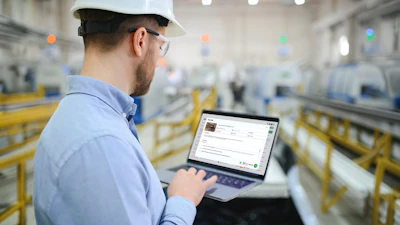
For too long, maintenance software was built for boardrooms, executives, procurement teams, and IT departments focused on budgets, oversight, and reporting dashboards. The technician standing in front of a piece of equipment at 2 a.m., trying to diagnose a failure, was an afterthought. The result was systems that captured compliance data but not operational intelligence. Tools that were technically "in use" but routinely worked around.
That has to change. AI’s promise in this space is real, but it depends entirely on getting the data foundation right and earning genuine technician adoption.
Usability isn't a nice-to-have anymore. It's the strategy.
The software powering frontline maintenance teams directly impacts productivity, safety, asset performance, and the ability to retain the skilled technicians organizations desperately need amid growing labor shortages. Technicians stay when they have good tools that make their jobs easier and are respected, rather than reduced to data-entry clerks.
As the CMMS category grows and consolidation accelerates, the companies that succeed in this next era of maintenance software will not simply be the ones that own the largest software ecosystem or have the broadest feature set. There will continue to be enormous value in companies that remain deeply focused on the realities of frontline work and prioritize usability above complexity.
The Work Ahead
Rising tides lift all boats, and right now the tide in this industry is coming in fast. The attention this moment brings will unlock board-level conversations and budgets across the sector, creating enormous opportunity across the entire market. But opportunity and execution are different things.
The investment flowing into this space demands execution worthy of the moment. Maintenance and asset management are no longer a quiet corner of industrial software. It is, increasingly, the connective tissue between the physical and digital worlds. The people at the center of that tissue are the technicians who show up every day and do the work.
For those of us building in this space, the question isn't whether the market is real. It never was. The question is whether we're building with the depth, focus and relentless commitment to the frontline that this moment is calling for.
The best days of this industry are ahead. I believe that as deeply as I've believed anything in this business. And I'm glad the rest of the world is starting to see it too.
Gary Specter is the CEO of Limble, the modern maintenance and asset management platform that serves more than 3,500 customers worldwide across industries, including manufacturing, facility management, healthcare and hospitality. Gary brings over 20 years of extensive experience building and guiding B2B SaaS companies through accelerated growth and scaled customer value creation. Most recently, he served as CEO of Simpro Group, leading the company through significant growth, operational transformation, and global expansion. Prior to Simpro, Specter was President of Cart.com and held senior leadership roles at Adobe, Magento, NetSuite, IBM, and Baynote, leading large-scale sales, growth, and customer success organizations worldwide.