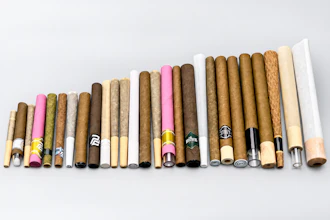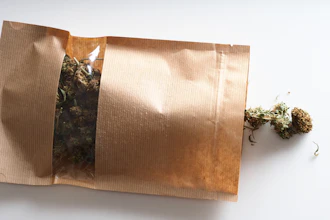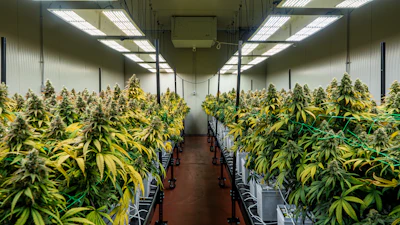
In January 2022, a worker at a Trulieve packaging facility in Holyoke, Massachusetts, suffered a fatal asthma attack while packaging pre-rolled marijuana. OSHA investigated and fined the company $35,219 for workplace safety violations. Lawsuits followed, and Trulieve eventually exited the Massachusetts market entirely. It was a tragedy that underscored the largely unaddressed and increasing risk across the cannabis industry.
The Trulieve case is not an isolated incident. Workers in cannabis cultivation and processing facilities face the potential for daily exposure to airborne particulates, mold spores, and volatile organic compounds that can trigger severe respiratory illness. Aspergillus, a common mold found in growing environments, has been linked to aspergillosis infections and even deaths among immunocompromised patients who consumed contaminated products. A 2020 CDC study found that cannabis users are 3.5 times more likely to develop fungal infections than non-users. Yet despite these documented risks, the cannabis industry still lacks unified air filtration standards in growing facilities, leaving workers, consumers, and crops vulnerable.
The Regulatory Patchwork: An Industry Without Standards
That vulnerability starts at the regulatory level. Cannabis cultivation operates without a federal air filtration standard, and state regulations vary wildly. Some states enforce zero-tolerance policies for mold, pesticides, and heavy metals in the finished product, while others have little to no limits at all. Most testing mandates focus on the end result rather than prevention, meaning growers must pass contamination tests but are rarely required to install proper air handling systems. When a batch fails, the entire crop is discarded at a total loss.
The contamination risks are not distributed evenly across a facility. Cutting rooms and packaging areas present the greatest threat because workers are in direct, prolonged contact with plant material that sheds particulates into the air. Dry rooms are particularly hazardous, as Aspergillus thrives in warm, stagnant environments and becomes airborne during the curing process. Geography adds another layer of complexity. Facilities on the East Coast contend with high humidity that accelerates mold growth and demands more robust filtration systems than operations in drier western climates.
The Half-Measures Problem: What Growers Are Actually Doing
Given those risks, you might expect the industry to be investing heavily in air quality. The reality is different. Walk through enough cannabis facilities and a pattern emerges. Many operators will tell you they maintain hospital-level cleanliness, but few actually use hospital-grade filtration. The FDA requires HEPA filters capable of capturing 99.97% of particles at 0.3 microns for pharmaceutical manufacturing under 21 CFR 211. Cannabis, despite being consumed and inhaled by millions of people, is held to no comparable standard.
The reality on the ground is a mixed bag. Many growers rely on MERV 8 filters, which capture larger dust particles but allow smaller microorganisms and fine particulates to pass through freely. The building itself is often part of the problem. Most cannabis operations occupy repurposed warehouses, retail spaces, or industrial buildings that were never designed for indoor cultivation. The HVAC systems installed in these spaces are frequently undersized or outdated and unable to meet the airflow requirements of a working grow. Some operators invest in floor-level filtration units while completely ignoring outdoor air intake, thereby filtering recirculated air while drawing in unfiltered contaminants from outdoors. When asked about HEPA filtration, growers commonly cite cost, maintenance burden, and strain on existing systems as reasons for avoiding upgrades.
The Odor Control Challenge
Contamination is not the only airborne problem cannabis operators need to solve. Community odor complaints have become a serious business threat. In Carpinteria, California, residents filed a class action lawsuit against Valley Crest Farms, claiming cannabis odor was harming property values and quality of life.
Cases like this are becoming more common as cultivation facilities operate closer to residential areas. Carbon filtration, vapor-phase systems, and specialized filter cassettes designed for volatile organic compounds are now part of the conversation. Data from Colorado has shown that cannabis cultivation is a significant source of VOC and terpene emissions. In many regions, odor control is no longer an optional upgrade but a required investment to maintain operating permits and community goodwill.
The Case for MERV 13 Filters as the Minimum Standard
With so many air quality challenges converging, the question becomes where to start. If HEPA remains a bridge too far for many operators, MERV 13 offers a practical and meaningful upgrade. MERV 13 filters capture particles down to 0.3 microns, including bacteria and fine particulates that standard MERV 8 filters miss entirely. In 2019, the CDC, OSHA, and ASHRAE recommended MERV 13 as the baseline for critical air-quality environments.
The performance gap between MERV 13 and HEPA is smaller than most growers assume, and the cost and maintenance burden is significantly lower. Modern HVAC systems are designed to handle MERV 13 without strain or airflow reduction. For facilities in high-humidity regions or those producing products intended for immunocompromised consumers, HEPA filtration remains the stronger choice.
But filters alone are only one piece of the equation. A truly effective system accounts for air changes per hour, pressure differentials between rooms, humidity control, and properly engineered intake and exhaust. Without that broader framework, even the best filter is working in isolation.
Regulation Is Coming
Federal oversight of cannabis cultivation is not a question of if but when. As more states legalize and the industry matures, uniform standards will follow. Food manufacturers and pharmaceutical companies already operate under strict FDA air quality requirements. Cannabis products that consumers inhale, eat, and drink should expect to meet similar standards in the future.
Growers who invest in proper air filtration and handling systems now will be ahead of the curve when that day arrives. Those who wait may find themselves scrambling to retrofit facilities under pressure and on a deadline.