America's legal cannabis market, both medical and recreational, had been enjoying years of growth. But last year the streak ended.
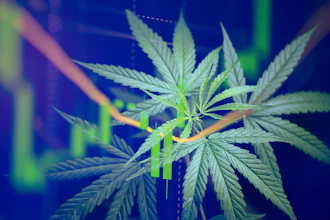
In 2025, total U.S. cannabis revenues were estimated to fall between $28.6 billion and $29.6 billion. That's down from about $30 billion in 2024. Moreover, it's the first time the country's cannabis market has failed to grow since 2014.
This is according to Whitney Economics and First Citizens Bank, who partnered together to produce the 2026 State of the U.S. Cannabis Industry Report. They largely attribute cannabis growth hitting a "weed bump" to oversupply.
"This oversupply leads to price compression. Price compression leads to declining margins, struggles with profitability and increases in unregulated activity," they wrote. "These declines are forecasted to continue into 2026, which typically leads to additional economic stress on operators during a period of macroeconomic softness."
It's a market reality that Whitney said will force operators to do more with less and one that could negatively impact labor demand.
While cannabis sales declined slightly on a macro level, individual states witnessed 2025 through very different lenses. Illinois, one of the longest-running legal markets in the U.S., saw sales drop from $2 billion to $1.7 billion. The report attributed the decline to Illinois' high tax levels suppressing growth in the market and incentivizing consumers to shop in Michigan and Missouri.
At the same time, New York's legal cannabis market saw sales double thanks to rapid growth in its licensed retail footprint and a concerted crackdown on illicit operators.
Looking ahead, both the cannabis and hemp industries are facing some significant policy changes. New, stricter rules for hemp-derived THC will hugely impact the industry that has sprung up around the 2018 Farm Bill. While the possibility of rescheduling cannabis could open the door to more research, medical applications and lower taxes in the cannabis industry.
"The impacts of both of these actions are clear. There is an opportunity for reform in the cannabis and hemp industries from a policy perspective, and potential reform creates opportunities for operators and ancillary businesses," wrote Whitney Economics' Beau Whitney. "Reform will take some time to fully realize, but many in both industries view THC definition changes and rescheduling as positive reforms that are beneficial for the future of cannabis."