For years, much of the cannabis industry’s attention around federal rescheduling has centered on financial benefits. The potential elimination of IRS Section 280E tax burdens, improved access to capital and broader investment opportunities could dramatically improve operators’ balance sheets. But the industry’s biggest transformation will not be financial. It will be operational.
As cannabis moves toward federal reform, successful businesses will be defined less by what they grow and more by how consistently they produce it. Rescheduling represents a turning point that will accelerate cannabis’ evolution from an agricultural market built on experience and intuition into a modern manufacturing industry driven by documented, repeatable processes.
Welcome to the GMP Era
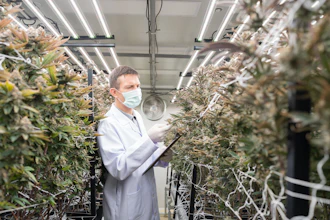
The cannabis industry is entering its Good Manufacturing Practice (GMP) era. Whether formal GMP requirements arrive immediately or evolve, the direction is becoming increasingly clear. Regulators, investors, retail partners and consumers are all demanding greater consistency, accountability and quality assurance. That means every stage of production from cultivation through packaging will require standardized procedures, documented controls and measurable outcomes.
For many operators, this represents a fundamental shift in mindset. Historically, cannabis cultivation has relied heavily on the experience of master growers and post-harvest teams making adjustments based on feel, observation and instinct. While expertise will always matter, future success will increasingly depend on standard operating procedures (SOPs), validated processes and documented performance that can be repeated regardless of who is working a particular shift.
Operators that begin building those systems today will have a significant competitive advantage tomorrow. More than just compliance documents, SOPs are now valuable operational assets that improve efficiency, reduce variability, simplify employee training and create the consistency required for long-term scalability. Waiting until new regulations are finalized will leave many companies scrambling to catch up while better-prepared competitors continue moving forward.
Consistency is the new currency
As cannabis matures, consistency will become the industry’s new currency. Consumers increasingly expect every package they purchase to deliver the same aroma, potency, flavor profile and overall experience as the last. Retailers want confidence that products will perform predictably. Regulators want documented evidence that manufacturing processes remain under control.
Delivering that level of reliability requires far more than skilled employees. It demands environmental monitoring, process validation and production systems capable of producing repeatable results batch after batch. Companies that consistently meet those expectations will strengthen customer loyalty, reduce costly product variability and build brands capable of thriving in a more competitive marketplace.
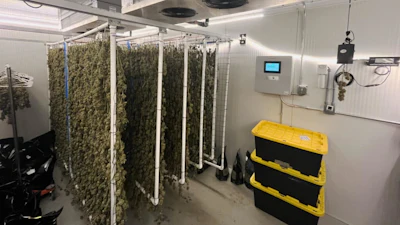
One of the industry’s greatest opportunities for standardization begins immediately after harvest. While cultivation often receives the majority of operational attention, drying, curing and storage remain among the largest sources of product variability. Small changes in environmental conditions during post-harvest processing can significantly impact moisture content, terpene preservation, cannabinoid stability, shelf life and ultimately the consumer experience.
The ability to control the post-harvest environment is quickly becoming a defining characteristic of high-performing operations. By replacing subjective decision-making with controlled environmental conditions and standardized workflows, operators can preserve more of the plant's natural characteristics while dramatically improving consistency across every harvest.
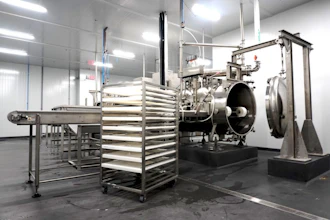
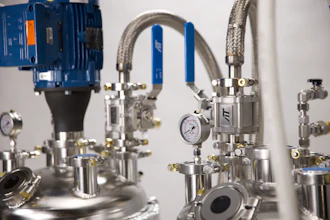
As expectations increase, technology will become essential operational infrastructure rather than an optional competitive advantage. Automated environmental controls, integrated monitoring systems, analytics platforms and digital quality management tools enable operators to maintain tighter process control while reducing human error. These technologies also generate the documentation increasingly required for regulatory compliance and quality assurance.
Technology investments should no longer be viewed simply as equipment purchases. They are strategic infrastructure investments that improve scalability, support workforce consistency, and prepare organizations for future regulatory requirements. Companies that modernize today will be better positioned to expand efficiently while maintaining product quality across larger production volumes.
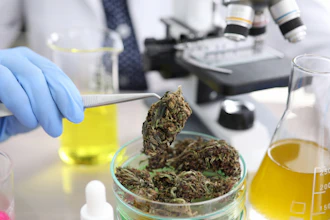
Equally important, data will replace intuition as the industry’s primary decision-making tool. Successful operators will increasingly rely on measurable performance indicators rather than anecdotal observations to evaluate production outcomes. Environmental data, moisture measurements, process documentation, yield analysis and quality metrics will provide valuable insight into how every production variable influences final product quality.
The claim of “quality” is now measurable
This shift creates opportunities for continuous improvement. Rather than repeating practices because they have “always worked,” operators can analyze documented results, identify trends and optimize processes based on objective performance data. Over time, this data-driven approach reduces variability, improves efficiency and creates increasingly predictable production outcomes.
In this new operating environment, quality cannot simply be claimed. It must be demonstrated. Batch records, documented SOPs, environmental logs and validated production processes provide objective evidence that products consistently meet established quality standards. This level of documentation builds confidence with regulators, retail partners, investors and consumers alike.
The companies that successfully differentiate themselves will be those capable of proving consistency rather than simply marketing it. Validation transforms quality from a subjective promise into a measurable business asset that supports brand reputation and long-term market growth.
Delay and risk being left behind
Unfortunately, operators that delay modernization risk falling behind. Manual processes, inconsistent documentation and reliance on institutional knowledge become increasingly difficult to scale as businesses grow and regulations become more demanding. What may seem like manageable operational inefficiencies today can quickly become costly liabilities in a more standardized marketplace.
Early adopters of automation, environmental control technologies and documented quality systems will gain significant advantages through improved operational efficiency, stronger product consistency and greater regulatory readiness. These investments create resilient businesses capable of adapting as industry expectations continue to evolve.
Cannabis is entering its next chapter, and operators have an opportunity to build stronger operational foundations before new requirements become mandatory. Reducing variability, investing in precision and implementing repeatable production systems are no longer simply best practices. They have become strategic business decisions that position companies for sustainable growth.
Federal rescheduling represents far more than a regulatory milestone. It signals the beginning of a new era where science, standardization and technology define operational excellence. The companies that embrace measurable processes, validated quality systems and data-driven production will be best positioned to compete in an increasingly sophisticated industry. As cannabis continues its transition into regulated manufacturing, consistency will become the new standard, and the future will belong to operators prepared to prove it.
Jane Sandelman is CEO & Co-Founder of VT Dry & Cure Technologies, the makers Cannatrol, which innovates technology that improves post-harvest processing while boosting efficiency and product quality for operators worldwide.