In a new episode of 5 Minutes with Cannabis Equipment News (CEN), Chris Webster with Gusmer Enterprises discusses how the legacy filtration company is applying more than a century of expertise to modern markets, including the rapidly evolving cannabis and infused-beverage sectors.
While Gusmer might be a new name to some in the cannabis space, the company boasts a rich history. Operating as a third-generation, family-run manufacturer, the company has been providing industrial products for more than a century.
Headquartered in Mountainside, New Jersey, the company maintains a three U.S. manufacturing facilities in Hickory, North Carolina; Waupaca, Wisconsin; and Fresno, California.
According to Webster, the true backbone of the company is its people. Gusmer employs a gifted team of engineers, material scientists and quality experts. Their technical sales and support teams are distributed strategically across the country, allowing them to work directly on-site with customers.
Gusmer has long been recognized as a trusted manufacturer in the beverage space. They built their reputation supporting the brewing, wine and distilled spirits industries. However, their filtration expertise extends far beyond traditional alcoholic beverages.
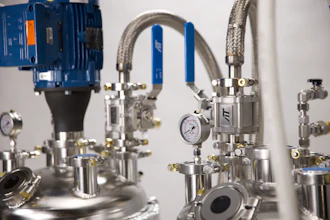
Today, Gusmer provides critical manufacturing support to non-alcoholic beverages, like cold brew coffee and sports drinks; essential and edible oils, like olive oil and seed oil extraction; and cannabis and nutraceuticals, offering filtration solutions for infused beverages and the cannabinoid extraction.
As the cannabis industry continues to mature and diversify, Gusmer's deep background in both edible oils and complex beverage formulation positions them as a key partner for operators looking to scale their extraction and infusion processes.
For businesses looking to upgrade or integrate new filtration systems, Webster stressed the importance of focusing on universal setups rather than price.
During the pandemic, many companies experienced severe operational headaches because their facilities relied entirely on proprietary, single-supplier systems. When that single supplier faced a supply chain issue, the customer's entire production line was forced to shut down.
By investing in equipment that uses universal setups, manufacturers can source alternative filters and parts if their primary supplier runs into bottlenecks. In an industry where uptime is everything, flexibility and redundancy are invaluable assets.