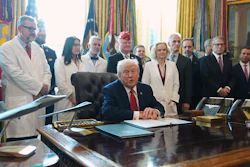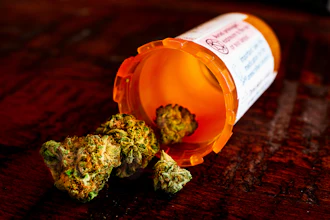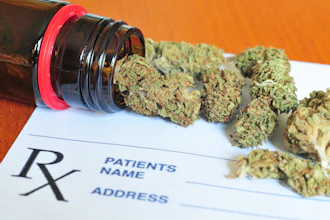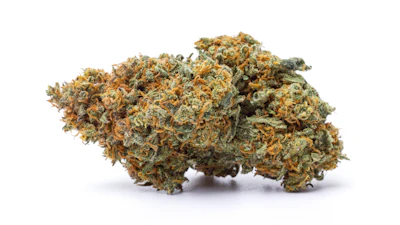
President Donald Trump on Thursday signed an executive order that could reclassify cannabis as a less dangerous drug under the Controlled Substances Act. The decision could move cannabis from a Schedule I substance – alongside LSD and heroin – to Schedule III with other substances considered to have moderate to low potential for physical and psychological dependence.
The order also instructs Trump administration staff to work with the Congress on updating the statutory definition of final hemp-derived cannabinoid products to “allow Americans to benefit from access to appropriate full-spectrum CBD products while preserving the Congress’s intent to restrict the sale of products that pose serious health risks.”
Many from across the cannabis and hemp industry were quick to cheer the order, which doesn’t federally legalize recreational or medical cannabis, but does have the potential to expand cannabis research and lessen tax burdens on cannabis companies.
"This bold and historic direction from President Trump represents long overdue change and a major milestone in cannabis reform," said Trulieve CEO Kim Rivers in a statement. "Trulieve is grateful for the decisive action taken by the Administration that acknowledges the medical benefits of cannabis, supports licensed and regulated operators, and allows law enforcement agencies to prosecute bad actors. We are committed to supporting the Administration throughout this process."
Cresco Labs CEO Charlie Bachtell called the order the “most consequential moment in the history of U.S. cannabis.”
“Rescheduling unlocks opportunities for comprehensive medical research. It validates the work of state leaders who pioneered thoughtful, highly regulated cannabis programs for their constituents. It sends a strong message to our criminal justice system to stop imprisoning people for a plant that’s been used as medicine for more than 5,000 years,” he said in a statement.
Curaleaf CEO Boris Jordan applauded the Trump Administration for “acknowledging what science, patients, and the industry have known for years”
“Rescheduling will expand research, ensure broad medical access, protect young people and patients from the illicit market, drive investment, and address outdated tax policies that punish legal operators. It’s a win for public health, the economy, and common sense,” he said in a statement.
Wendy Bronfein, co-founder, chief brand officer and director of public policy at Curio Wellness, called today a significant turning point after years of “empty promises and political posturing around cannabis reform.”
“What makes today especially meaningful is that it’s informed by years of rigorous work from leading experts in medicine, pharmacology, and public health—including members of Curio’s Scientific Board, who have contributed trusted, evidence-based insight from both the U.S. and abroad. Their research and engagement helped ensure policymakers were equipped with credible data, not ideology,” she said in a statement.
Cy Scott, co-founder and CEO of cannabis research firm Headset, said rescheduling cannabis will have an immediate impact on an industry under historic financial pressure by reducing tax liabilities.
“...280E is not an abstract policy issue. It directly determines whether many otherwise healthy, well-run businesses can stay open. Because the tax effectively applies to gross profit rather than true operating income, a significant share of cannabis retailers today are operating at or near breakeven after federal taxes. Removing 280E would create an instant improvement in cash flow, allowing operators to stabilize their businesses rather than simply survive quarter to quarter,” he said in a statement.
Jaunty CEO Nicolas Guarino, who is also co-founder of the Empire Cannabis Manufacturers Alliance, said the most immediate impact would be felt in medical markets.
“Adult-use markets in 24 states and D.C. would still face significant federal limitations that hinder the industry from reaching its full potential. We’re hopeful that this decision marks a progressive and landmark decision - one that sets a clear precedent and helps advance improved measures like SAFE Banking, increased access to logistic providers and to capital, and ultimately, federal legalization,” he said in a statement.
Jim Hagedorn, chairman and CEO of Scotts Miracle-Gro, viewed the move as a blow to the illicit cannabis market and said it will “strengthen the financial viability of the legal and regulated industry that employs over 425,000 people and contributes $100 billion to the economy.”