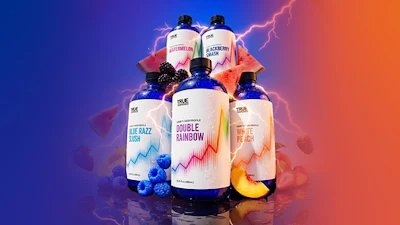
True Terpenes, a global leader in terpene science and aroma innovation serving 107 countries and powering over $8 billion in global CPG annually, today announced that its vape ingredient toxicology program has completed an independent review by a board-certified toxicologist.
The review comes as the cannabis industry faces growing scrutiny around the ingredients used in inhalable products and increasing expectations for stronger testing, documentation, and science-based safety standards. As the industry matures, companies are being asked to show not just what's in their products, but how those ingredients are evaluated for safety.
The reviewer evaluated True Terpenes' methodology and its robust standard operating procedures to guide the implementation of this program.
The reviewer holds a Ph.D. in Pharmacology and is a Diplomate of the American Board of Toxicology. She has conducted more than 200 toxicological evaluations of ingredients used in e-liquids and cannabis distillates. She has also led nonclinical toxicology work for U.S. Food and Drug Administration premarket tobacco product applications.
A program built before it was required
True Terpenes launched its vape ingredient toxicology program in 2020, one of the first of its kind in the cannabis industry. The program is led by Dr. Shawna Vreeke, Ph.D., DABT. It evaluates every compound used in the company's vape formulations through a science-based risk assessment. The assessment reviews available toxicological data and sets an acceptable daily inhalation exposure limit for each ingredient.
That methodology served as a foundation for ASTM D8587 and ASTM D8588. These are international consensus standards for assessing non-cannabinoid ingredients in cannabinoid vape products, developed through ASTM International Committee D37 on Cannabis. Dr. Vreeke served as technical writer and key contact in their development.
"Nobody required us to build this in 2020," said Daniel Cook, CEO of True Terpenes. "We built it because an industry that asks for trust has to earn it first. We helped write the standards. Now we've asked an independent expert to test our own work. Safety infrastructure isn't a compliance cost. It's the foundation everything else stands on."