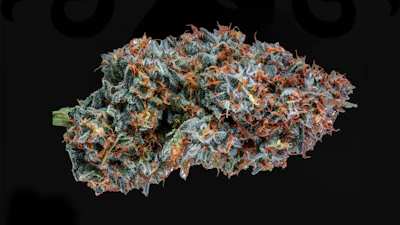
Dark Heart spent much of its existence as a legendary cannabis nursery.
Formed in the mid-2000s, Dark Heart (formerly Dark Heart Nursery) built a name for itself by refining popular California cultivars like Blue Dream. The company reputation was staked to its extremely rigorous process. Every strain goes through structured blind testing to evaluate aroma, flavor, smoothness and experience.
After Curaleaf acquired it in 2024, Dark Heart was able to scale its operation. Earlier this year, it launched as a standalone flower brand after years of staying in the lab and on the farm. And last month, the company launched its newest strain collection, Forbidden Fruits, a roster selected from a list of more than 4,000. Only Razzle Dazzle, Berry Blintz and Icy Grapes made the cut.
Cannabis Equipment News reached out to Jeremy Warren, director of plant genetics, and Richard Philbrook, principal scientist, to find out more about what it’s been like to put their name out there, how the Dark Heart process has evolved and how consumers’ tastes are changing.
Cannabis Equipment News: Dark Heart only recently launched as a standalone brand after decades in cannabis. What has the response been like so far?
Richard Philbrook: For the vast majority of Dark Heart’s existence, we’ve worked with farmers and growers rather than directly with cannabis consumers. This naturally involved different priorities and focus. Launching as a standalone flower brand has given us the opportunity to connect with people in a completely different way, and that’s been incredibly fulfilling. It's awesome to see people enjoying something we developed from the earliest stages of breeding through cultivation. Seeing the Dark Heart logo on flower jars, or people talking about our strains on Instagram and Reddit, is honestly pretty surreal. That direct connection to consumers also gives us inspiration for what we want to create next.
Jeremy Warren: One of the most encouraging pieces of feedback we've seen is that people understand we're not trying to chase trends. Through our internal breeding program, we're focused on introducing things that are genuinely different and new. We're seeing people realize these strains are targeting specific flavor, aroma and taste profiles. While one profile may be someone's favorite, it may not be for another. At the same time, there seems to be an understanding of why someone else may enjoy it even if they don't. That’s not something we see a whole lot in the industry. We're helping build a space where there's room for many different favorite profiles.
CEN: How does Dark Heart’s process work for new strains and how do you decide which strains pass and which are rejected?
Philbrook: The first step in creating the lineup for a new drop is to brainstorm around a flavor or aroma, a breeding target, or even a general vibe or theme that stands out to us. We then select parental lines we think will contribute to that target, or combinations of lines that might produce variations of that theme, make the crosses at our breeding facility and begin hunting through the offspring.
We collect a significant amount of agronomic and sensory data both pre- and post-harvest and combine that information to select winners that perform both as cultivars for growers and as finished products for the theme we're trying to achieve. The whole process takes about 18 months from concept to the first batches of flower reaching store shelves. It's a delicate balancing act because we're looking for plants that satisfy a lot of different needs, many of which can be contradictory. We may reject hundreds of potential winners before finding the one plant that checks all the boxes.
For the Forbidden Fruits drop, we started by focusing on the terpene terpinolene. It's a very distinct and somewhat polarizing terpene, and we had just wrapped up an R&D project identifying DNA markers that can predict whether a plant will be high or low in terpinolene. We crossed Raspberry Parfait, which is high in terpinolene, with two strains that don't contain much of that terpene, then selected plants that contained terpinolene while also expressing characteristics we liked from both parents. That work resulted in Razzle Dazzle and Berry Blintz.
Icy Grapes was selected to help balance the palate with a non-terpinolene strain that shares a parent, Kush Mints, with Berry Blintz. In a way, it's a smokable proof of concept showing how DNA markers can help create a range of predictable plants from the same group of parents.
CEN: Is the cannabis flower segment starting to embrace aroma, flavor and other sensory aspects instead of just potency?
Warren: We're seeing the start of a wave of people noticing that two strains with the same terpene profile can smell vastly different. People are looking for more information on what actually controls aroma and flavor in cannabis.
Philbrook: I hope so! There are so many more interesting aspects of cannabis, and flower in particular, than THC percentage. As the market and consumers evolve, the focus will continue to shift from potency alone.
Even the discussions consumers are having about terpenes are still just the tip of the iceberg when it comes to the range of molecules the plant produces that affect sensory experience. Our lab is particularly interested in non-terpene compounds that appear to influence aroma even more than terpenes do. Have you ever wondered why two strains with the same terpenes can smell vastly different? That's a question we're trying to answer in our lab. We hope future Dark Heart collections can help highlight these compounds and continue driving the shift toward a more sensory-driven approach to cannabis.