Pipat Yapathanasap/iStock
Cannabis cultivation has become more sophisticated in almost every measurable way. Operators track potency, terpene production, environmental conditions and dozens of other variables that would have been difficult to measure consistently a decade ago. For a commercial cultivator, though, one of the oldest metrics still matters most, and that is yield.
The reason is pretty straightforward. A high-yielding cultivar that consumers do not want is not commercially useful, but neither is exceptional flower that cannot produce enough sellable product to justify the canopy it occupies. Commercial cultivation requires finding the balance between the quality consumers expect and the yield an operator needs to make the economics work. As markets become more competitive, that balance becomes even more important because cultivators have to produce at scale while delivering the potency, terpene profile, taste, bag appeal and consistency that keep consumers coming back.
The reason is pretty straightforward. A high-yielding cultivar that consumers do not want is not commercially useful, but neither is exceptional flower that cannot produce enough sellable product to justify the canopy it occupies. Commercial cultivation requires finding the balance between the quality consumers expect and the yield an operator needs to make the economics work. As markets become more competitive, that balance becomes even more important because cultivators have to produce at scale while delivering the potency, terpene profile, taste, bag appeal and consistency that keep consumers coming back.
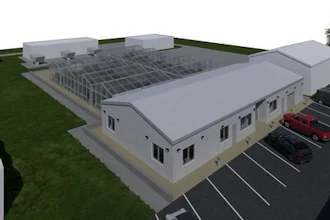
In a regulated market, that canopy is effectively fixed. It may be limited by a license, the physical size of a facility or the capital available to build additional cultivation space. Once you have built out that space, you cannot simply add more square footage every time you want to generate more revenue. You have to get more out of what you already have.
At our New Jersey facility, for example, we have roughly 10,000 square feet of canopy. If a cultivar produces 60 grams per square foot, that gives us a fixed amount of cannabis to bring to market. If we can increase that to 70, 80 or 90 grams per square foot while maintaining quality, we have substantially more product to sell without adding another square foot. That is the basic math behind why yield matters so much.
Of course, we are not growing in a vacuum. We are trying to hit yield, potency and terpene targets simultaneously because those are the metrics that drive purchasing decisions. In markets such as New Jersey, consumers often cannot see or smell flower before buying it, so they are often making initial decisions largely based on what appears on the label. This also increases the importance of budtenders, who can help match producers, strains and labels with customer preferences. Potency tends to be the first filter, followed by terpene percentage. Whether cultivators like it or not, we have to grow for the market that exists.
Higher potency and terpene content can help move a product toward the upper end of the market's pricing range, but there is still a ceiling on what buyers will pay. Once I have a cultivar that delivers enough potency and terpene content to compete at the price point I am targeting, the most direct way to generate additional revenue is to grow more of it.
Zkittlez is a perfect example. It has one of the most desirable terpene profiles in cannabis and remains one of my favorite things to smoke, but in our facility, the original cultivar might produce only 35 to 40 grams per square foot, compared with 70 grams or more for many of the cultivars we grow. If I dedicate that canopy to Zkittlez and get half the yield I could get from another cultivar, I have to make up that difference somewhere. Unless the market is willing to pay twice as much for it, I am giving up revenue from that space. I may love the flower personally, but as someone responsible for a commercial cultivation operation, I also have to justify why we are growing it. That is why we look for crosses that can deliver the characteristics we love about a cultivar while producing the yield we need to make it commercially viable.
Even grams per square foot does not tell the entire story. What matters is how much usable, sellable flower we can consistently generate from the same lights, labor and square footage. Every extra day we spend in veg and every environmental condition we get wrong eventually shows up in yield, which is why operational discipline matters just as much as what looks good on paper.
Sell-through is another part of that equation. We see cultivars testing around 30% THC sell two or three times as quickly as those testing around 25%. That velocity matters because cultivation does not stop while inventory waits for a buyer. In New Jersey, we have a six-month expiration window, and dispensaries generally want about three months remaining to sell that product through to consumers. That leaves us with a relatively short period to move a harvest into retail while another crop may be only a week or two behind it.
I cannot afford to have flower sitting in the vault while fresh flower keeps coming down. The cultivars we choose need to yield, but they also need to move, which is why genetic selection is so important. For me, it is number one with a bullet. Some cultivars simply produce more per square foot than others, and with the range of genetics available today, growers can seek out specific terpene profiles without necessarily accepting the yield limitations that once came with them. From there, the job is to create a consistent environment and give the cultivation team the infrastructure, standard operating procedures and discipline needed to reproduce those results harvest after harvest.
I would love to say we can simply grow the weed we love to smoke and let everything else take care of itself. That is not how a commercial cultivation business works. But making commercial decisions does not mean taking the passion out of cultivation. In fact, the opposite is true.
The best cultivation teams care deeply about the quality of the flower while also understanding that yield and efficiency matter. There has to be pride in producing something you would want to smoke yourself, because that pride is what drives the attention to detail required to reproduce quality harvest after harvest. The challenge is building a team that sees quality and yield not as competing priorities, but as two measures of doing the job well.
Every square foot of canopy has to produce, every harvest has to sell through and another crop is always coming behind it. We still have to hit the potency and terpene numbers consumers are looking for, and the flower still has to be good.
Once you clear those bars, the question becomes pretty simple. How much high-quality, sellable cannabis can you consistently produce from the canopy you have?
Yield may be king on the spreadsheet, but quality will always win in the streets. Commercial viability requires building teams that understand both sides of that equation, taking pride in the quality of what they produce while constantly pushing for better yield and efficiency.
Josh Krane serves as Head of State, New Jersey for the flower-forward cannabis company Grown Rogue. He leads cultivation, commercial execution, and market development in one of the largest, developing and increasingly more competitive adult-use markets in the country.