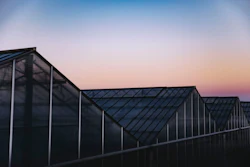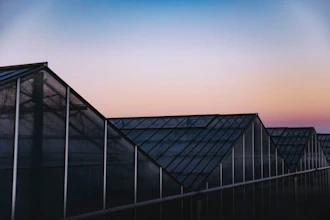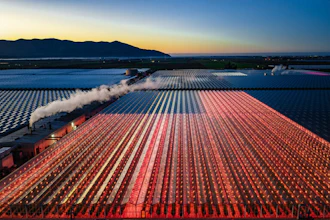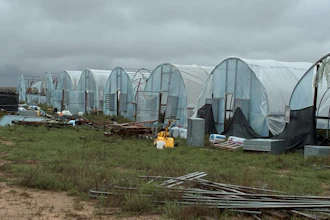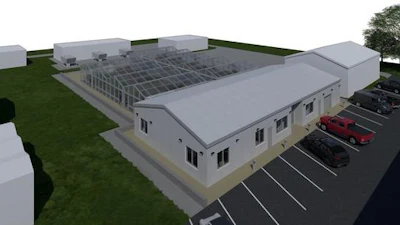
Climate-controlled greenhouses that will replace facilities dating back to the 1960s are coming to the University of Arkansas Division of Agriculture thanks to a $2.5 million grant from the U.S. Department of Agriculture.
Combined with a UADA match, the award creates a $5 million investment in agricultural research and extension infrastructure. The USDA’s National Institute of Food and Agriculture awarded the grant through the Research Facilities Act Program as part of a $121 million nationwide investment at more than 30 universities.
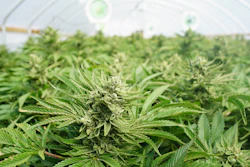
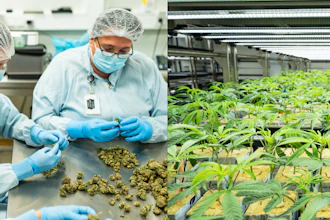
UADA greenhouse facilities are used to develop new crop varieties, improve production practices and address emerging challenges facing agriculture. Fruit and vegetable breeders and researchers in plant disease management, hydroponics, ornamental plants, turfgrass science and food science also use the greenhouses.
Mary Savin, head of the department of horticulture for UADA and project leader, said the seven aging greenhouses at the Milo J. Shult Agricultural Research and Extension Center no longer provide the level of environmental control needed for year-round agricultural research.
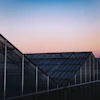
The complex of nine greenhouses will incorporate advanced environmental control technologies, including modern heating and cooling systems, ventilation, irrigation, lighting, humidity controls and automated monitoring systems. A classroom and more preparation space for greenhouse research are also in the plans.
“This new greenhouse facility will provide infrastructure to support multidisciplinary research, partnerships with stakeholders, and experiential learning to educate the next generation of workforce leaders,” Savin said. “Researchers will be able to conduct longer and more reliable studies, complete multiple breeding and growing cycles, and evaluate new crops, production practices and agricultural technologies under precisely controlled conditions.”
“The greenhouse complex will position Arkansas researchers to better serve producers and communities for decades to come,” said Jean-François Meullenet, senior associate vice president for agriculture-research and director of the Arkansas Agricultural Experiment Station, UADA’s research arm. “It will modernize critical infrastructure and expand opportunities for innovation, teaching and outreach.”
Planning is underway with construction expected to be completed in late 2028. UADA will sustain the complex through continued institutional support, greenhouse-use fees and revenue from research and industry partnerships.
This work is supported by the Research Facilities Act Program through USDA-NIFA project award no. 2026-77047-47240.
U.S. Sen. John Boozman of Arkansas said he was “proud to champion funding for the Research Facilities Act Program through the Working Families Tax Cuts,” and it was “great to see Arkansas benefiting from these increased investments and updating research facilities so it can continue to be a leader in food innovation.”
U.S. Rep. Steve Womack, who represents the state’s 3rd Congressional District, echoed those sentiments.
“With this $2.5 million investment, the University of Arkansas Division of Agriculture will have the resources to build new greenhouse infrastructure, giving students and researchers the updated equipment and facilities needed to better study the crops that feed and clothe America,” Womack said. “Having new greenhouses on campus is long overdue, and I am proud to have voted to fund the Research Facilities Act Program in the Working Families Tax Cuts law that has made this grant possible.”
Why the greenhouse complex is needed
- Current greenhouses offer limited environmental control: Most of the current facilities lack the equipment, utility infrastructure and capability needed for precise climate management. Researchers cannot consistently control temperature, light or other growing conditions.
- New greenhouses will replace glass with polycarbonate panels: Polycarbonate is expected to be more durable during severe weather common in the Southeast and more energy efficient, supporting greater year-round use.
- Researchers will be able to customize greenhouse environments: Programmable control systems will allow different greenhouses to maintain distinct temperature, light and environmental conditions tailored to specific experiments.
- Current limitations restrict experiment duration: Some research projects can currently run only two to three weeks before greenhouse conditions become problematic. The upgraded facilities will support longer-term studies.
- Plant breeding programs will gain new capabilities: Automated controls and phenotyping tools will support high-throughput, precision breeding research and allow multiple breeding cycles per year without seasonal interruptions.
- New greenhouses will enhance education and workforce development: Students and stakeholders will gain hands-on experience with modern greenhouse technologies and develop industry-relevant skills.
About the Division of Agriculture
The University of Arkansas Division of Agriculture’s mission is to strengthen agriculture, communities, and families by connecting trusted research to the adoption of best practices. Through the Agricultural Experiment Station and the Cooperative Extension Service, the Division of Agriculture conducts research and extension work within the nation’s historic land grant education system.
The Division of Agriculture is one of 22 entities within the University of Arkansas System. It has offices in all 75 counties in Arkansas and faculty on three system campuses.
Pursuant to 7 CFR § 15.3, the University of Arkansas Division of Agriculture offers all its Extension and Research programs and services (including employment) without regard to race, color, sex, national origin, religion, age, disability, marital or veteran status, genetic information, sexual preference, pregnancy or any other legally protected status, and is an equal opportunity institution.