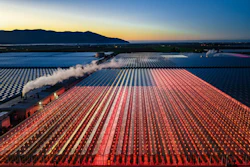
Glass House today shared preliminary financial results marked by an increase in production and a decline in the cost of production.
The company reported revenue totaling $56.8 million, compared to $47 million in the second quarter of 2026 and $26.2 million in the third quarter of 2025. It also said it reached record biomass production of approximately 317,000 pounds, up from 246,000 pounds in the second quarter of 2026. At the same time, cost of production of approximately $110 per pound was down compared to $122 per pound in the second quarter of 2026.
However, average selling price per pound was $150, compared to $211 per pound in the second quarter of 2026 and $155 per pound in the third quarter of 2025. That decline may have contributed to gross profit falling to $14.9 million compared to $15.8 million in the second quarter of 2026.
“While seasonally lower pricing and the trim-heavy sales mix from Q2 production pressured margin during the quarter, higher volume kept gross profit close to what we reported for the second quarter," said Glass House CEO Kyle Kazan in a statement.
Kazan said Glass House is now sufficiently capitalized to optimize the farms and has become cash flow positive, so the company has turned off its at-the-market offering program after selling approximately 5 million shares and raising $46 million in gross proceeds.
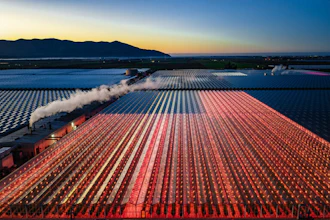
"This has funded Greenhouse 2 expansion and is funding optimization through capital improvement projects of Greenhouse 5 and Greenhouse 6, and the Camarillo farm in general. We have approximately $39 million to finish funding improvement projects and reach cash-flow positive. Our long-term prospects have not changed, and we continue to expect we will produce approximately 1 million pounds of biomass this year and ultimately reach our $95 cost of production target. Our team is uniquely experienced in both optimizing our farms and continuing to work within the ever-changing and often challenging California cannabis market. Some of the team has been with us since we acquired our very first farm over 10 years ago, and many more have been with us since before we went public and acquired the Camarillo facility. While there is a dearth of experienced cannabis operators who have enjoyed success in California, we are fortunate to have that institutional knowledge and experience within Glass House," said Kazan in a statement.